

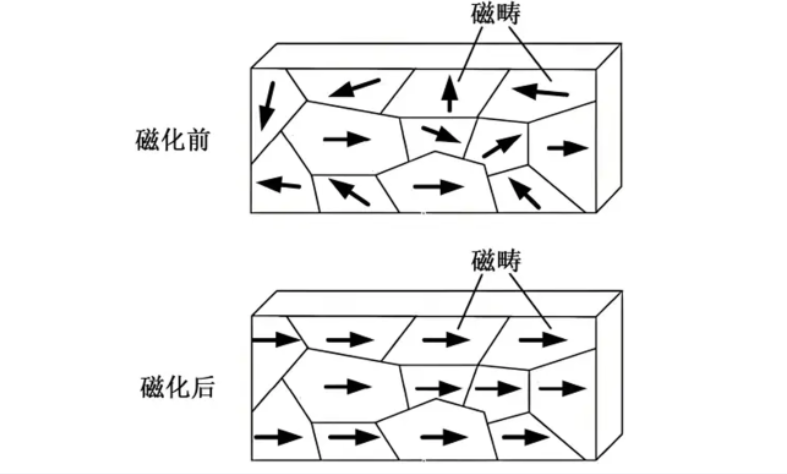
The magnetic properties of neodymium-iron-boron magnets originate from countless tiny "magnetic domains" inside them - they resemble miniature magnets, neatly arranged under normal conditions, and when superimposed, they form the strong magnetism we can feel. However, magnetic domains have a clear weakness: they are sensitive to high temperatures, and an increase in temperature can disrupt their orderly arrangement.
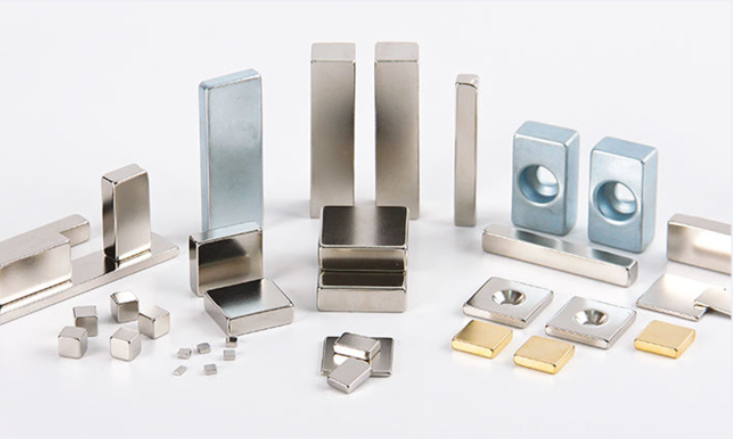
NdFeB magnets must be demagnetized before being melted. Their demagnetization temperature (also known as the Curie temperature) is approximately 300-400℃, while their melting temperature is well above 1000℃. Ordinary flames (such as the outer flame of a candle, which is about 500℃) are sufficient to disrupt the magnetic domains, but they are far from the high temperature required for melting.

Let's do a small experiment with a neodymium iron boron magnet: when it is close to a candle flame, the suction force noticeably weakens after 3-5 seconds; after 10-20 seconds, it completely loses its magnetism and can no longer pick up a paperclip, but its shape remains unchanged; even if it is continuously heated by a strong flame, it will only become brittle and crack, and ordinary flames cannot melt it at all.
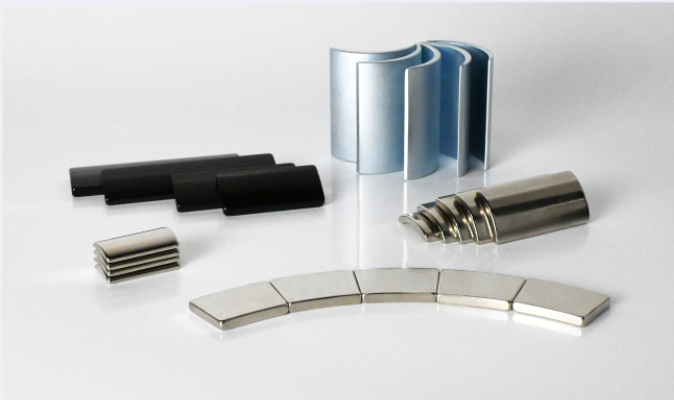
If the heating does not exceed the upper limit of the demagnetization temperature, the magnetic properties can be partially restored after cooling; if it is completely demagnetized, it cannot recover on its own after cooling, but it can be restored to strong magnetism through magnetization (by placing it in a strong magnetic field to guide the magnetic domains to rearrange).
Summary: When neodymium iron boron magnets encounter a flame, the magnetic domains are first disrupted and demagnetized due to high temperatures. To melt them, specialized high-temperature equipment is required. Tiny magnets hide little mysteries of heat and magnetism
