How Is Surface Magnetic Flux Density Accurately Measured?
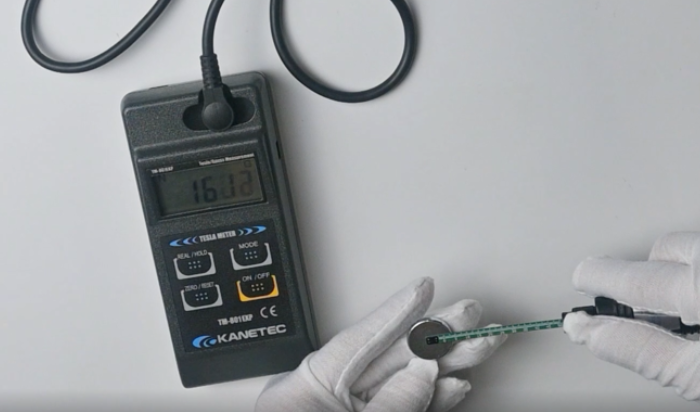
Surface magnetic flux density is measured with professional equipment — a Gaussmeter (also known as a Teslameter). During measurement, the Hall probe of the gaussmeter shall be placed vertically and closely against the center point on the magnet surface. Read the value once it stabilizes; this reading is the commonly quoted surface magnetic flux density of the magnet.
Measured results are subject to multiple influencing factors. Angular deviation between the probe and the magnet surface, measuring position, ambient temperature, magnet coating and coating thickness may all cause discrepancies in readings. Accordingly, a deviation of 5%–10% in surface magnetic flux density values tested by different manufacturers or different instruments is considered normal.
High Surface Flux Density Does Not Equal Strong Pull Force

This is one of the most prevalent misconceptions in the magnet industry. When all other conditions remain identical, a magnet with higher surface magnetic flux density does deliver stronger pull force. However, this conclusion no longer holds without the prerequisite of “identical other conditions”.
Magnetic pull force is a comprehensive indicator. Apart from surface magnetic flux density, it is determined by multiple factors including magnet volume, shape, material and thickness of the attracted surface, as well as the attraction gap. For instance, an N52 magnet with a diameter of 10 mm and thickness of 1 mm may feature a surface flux density as high as 5,000 Gs, yet its pull force is far weaker than that of an N35 magnet sized 50 mm in diameter and 10 mm in thickness (with approximately 3,000 Gs surface flux density. This is because pull force essentially reflects the overall magnetic flux of a magnet, while surface magnetic flux density only refers to the magnetic induction intensity at a single point on the surface and cannot represent the overall magnetic performance of the magnet.
What Should You Consider When Selecting NdFeB Magnets?
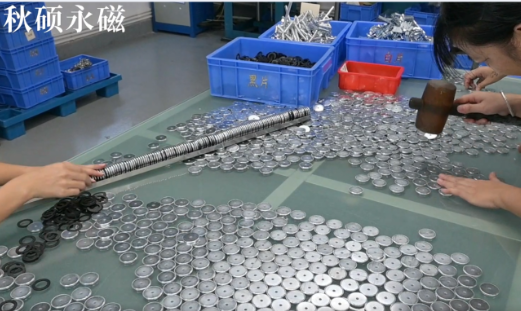

Since surface magnetic flux density cannot serve as the sole criterion, what core indicators should be focused on during procurement? First comes the maximum energy product (BHmax), the primary parameter for measuring a magnet’s overall magnetic storage capacity. The higher the value, the stronger the magnetic force generated by a magnet of the same volume. Second is remanence (Br), which defines the upper limit of the magnet’s surface magnetic flux density. Coercivity (Hc) is another key metric; it represents the magnet’s resistance to demagnetization and determines its stability under high temperatures and strong magnetic fields.
For purchasers, the most practical approach is not simply pursuing high surface flux density. Instead, clearly inform manufacturers of your actual application requirements: the material and weight of objects to be attracted, operating ambient temperature, installation space constraints and so on. Professional magnet manufacturers will recommend grades and specifications with optimal cost performance based on this information, avoiding unnecessary cost waste.