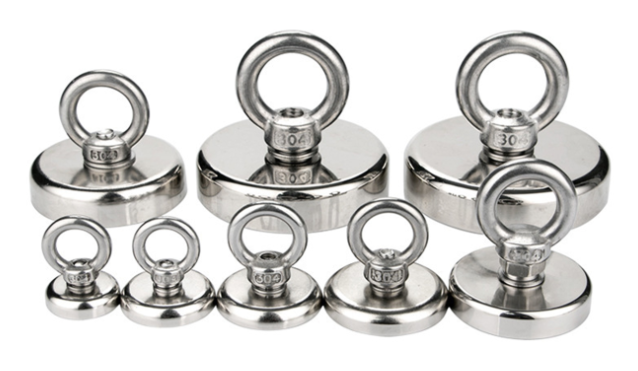

What Is a Pot Magnet?
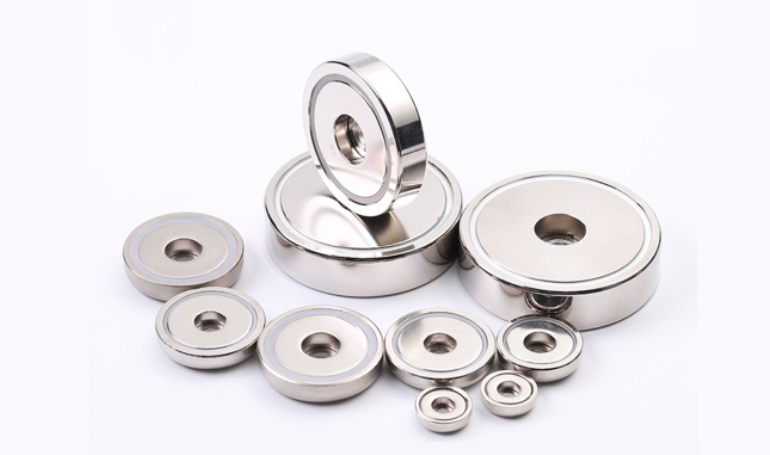
Pot magnets, also known as cup magnets or mounting magnets, are magnetic assemblies consisting of sintered NdFeB strong magnets embedded within a steel housing.
Conventional permanent magnets are brittle and prone to breakage, with scattered magnetic flux. In contrast, the steel shell of a pot magnet firmly protects the inner magnet core and acts as a magnetic shield. It concentrates magnetic force onto a single working surface to significantly boost pull force. Most pot magnets can withstand temperatures up to 80°C and resist demagnetization. They serve as a practical solution balancing magnet protection and magnetic performance.
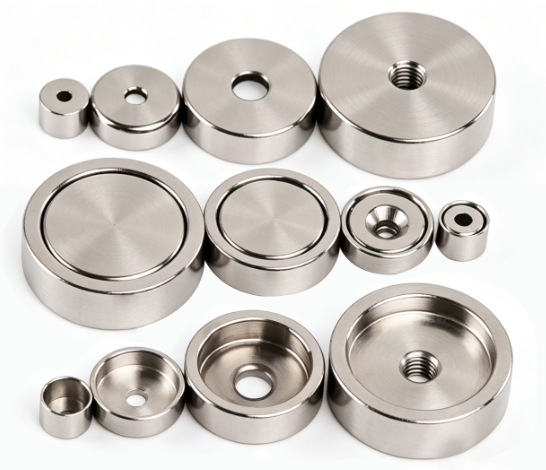
Pot magnets are available in a wide range of styles to meet diverse installation requirements, with mainstream types easy to distinguish. Round types come in specifications such as countersunk hole, straight hole, internal and external threads, and flat threads. Square types are mainly countersunk pot magnets. There are also functional models fitted with accessories, including open, closed and swivel magnetic hooks, as well as recovery magnets equipped with stainless steel lifting rings. The diverse structures enable flexible installation.
Advantages of Pot Magnets
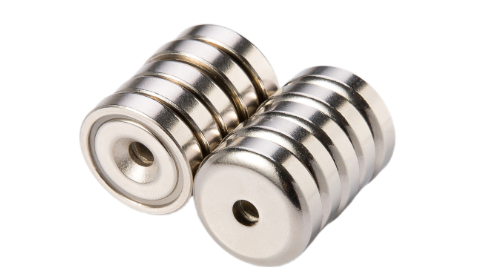
From the perspectives of manufacturing and practical application, pot magnets offer remarkable advantages. The steel housing concentrates magnetic flux, delivering stronger pull force within a compact size. They consume less rare earth magnetic material, resulting in lower costs compared to standalone strong magnets. The outer shell encapsulates and safeguards the brittle magnet core, greatly improving durability. Compatible with various accessories such as screws, hooks and lifting rings, they support multiple mounting methods and suit a broader range of application scenarios.
Application Fields of Pot Magnets